
With you in difficult circumstances
These guides support people in Iran facing violence, repression and limited access to help. Fear of arrest or further harm can make seeking treatment difficult. Everyone deserves care and respect.
You do not need every item of equipment or prior knowledge of every step. Help within your abilities and the safety of the situation. Serious injuries need prompt professional care. If contacting official services or attending a medical facility puts you at risk, seek help from a trusted doctor or responder to find safer access to treatment wherever possible. Speak calmly, without blame, and listen to the injured person’s concerns and wishes.
Learn to help others. Explore the Society’s training videos and a grouped visual collection on casualty transport, all on one page.
Training videos with Afshin Abdollahi
The videos and text within the posters are in Persian. Page headings and descriptions are available in all three site languages.
01 / VIDEO
First aid — Part 1
Start the Society’s first aid training series.
02 / VIDEO
Organising first-aid teams
Training on organising aid teams during protests, presented by Afshin Abdollahi, Chairman of the Society.
03 / VIDEO
Introduction to casualty transport
A training video on casualty transport, accompanied by the grouped poster collection below.
Emergency preparedness and initial injury care
Four learning guides from the Iranian Red Lion and Sun Society: preparing your household and understanding initial care while professional help is on its way.
01 / IRLASS
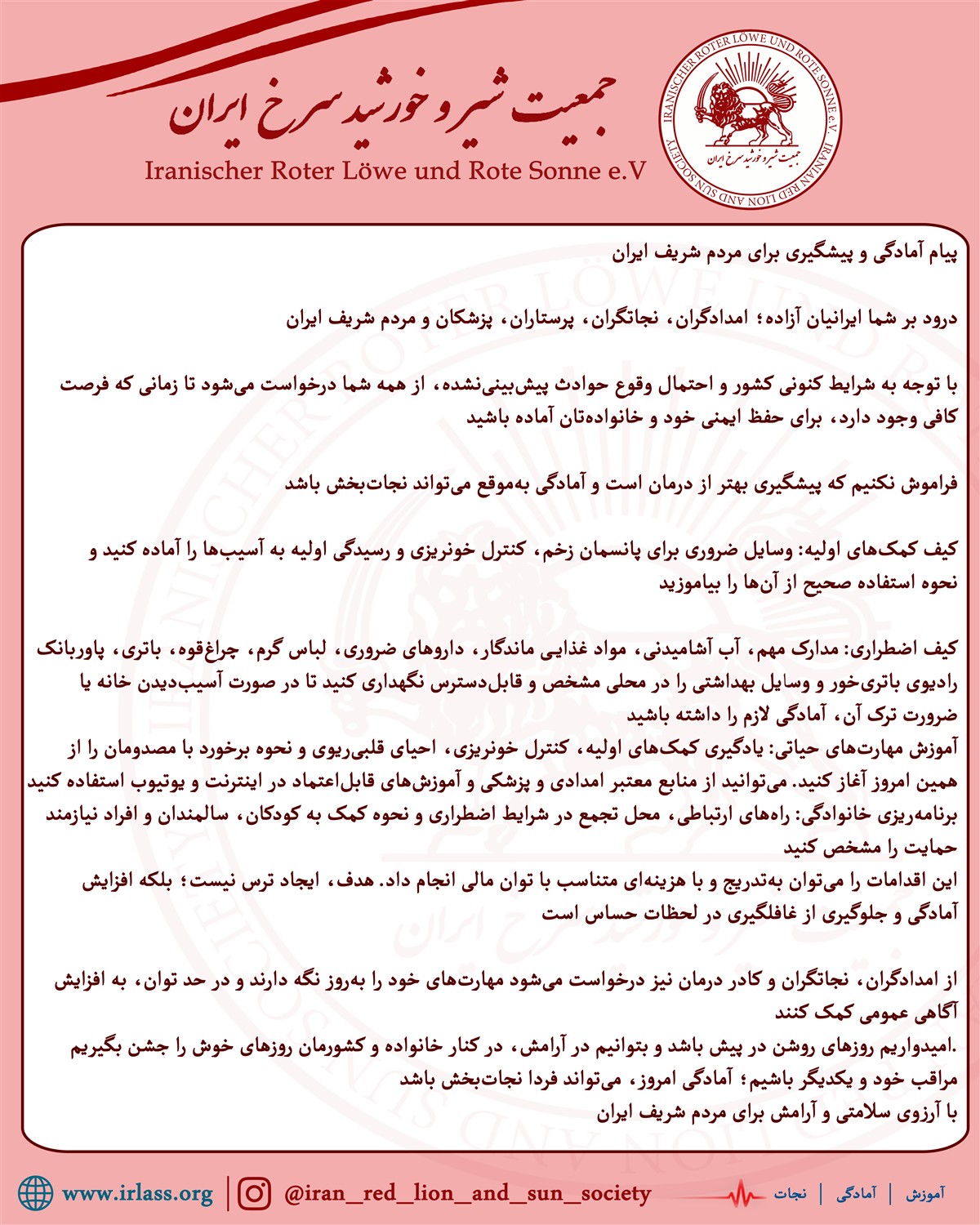
Household emergency preparedness
Greetings to the people of Iran, first-aid responders, rescuers, nurses and doctors. Preparing for unexpected events can help protect you and your family. The aim is preparedness, not fear: having a plan and essential supplies before a crisis occurs.
First-aid kit
Prepare sterile gauze, dressings, bandages, disposable gloves and suitable supplies for initial wound care and bleeding control. Learn how to use them correctly and check their expiry dates.
Emergency bag
Keep important documents, drinking water, shelf-stable food, essential personal medicines, warm clothes, a torch, batteries, power bank, battery-powered radio and hygiene supplies in a known, accessible place. Consider the needs of children, older people and anyone who needs additional support.
Learn lifesaving skills
Learn first aid, bleeding control and CPR from qualified instructors and reliable sources. Educational videos can supplement practical training. Responders and healthcare professionals should also keep their knowledge and skills up to date.
Family plan
Agree on communication methods, emergency contacts, a meeting place and responsibilities for helping vulnerable family members. Review and practise the plan together.
Gradual, ongoing preparation
Build your supplies gradually within your budget. Regularly check stock, equipment charge levels and medicines. By sharing knowledge and looking after one another, preparation today can help save lives in the future.
Household emergency preparedness
02 / IRLASS
Head injuries and scalp bleeding
A head injury may also involve the brain, skull or neck. A small external wound does not prove that the injury is minor. Seek emergency help after a severe impact or if warning signs are present.
Safety and reduced movement
Ask the person to remain calm and avoid unnecessary head and neck movement. Do not move them unless needed to escape immediate danger or provide lifesaving airway and breathing care. Do not force the head or neck straight.
Managing bleeding
For a straightforward scalp wound with no indication of skull fracture or an embedded object, apply direct pressure with gauze or a clean cloth. If a fracture is suspected, do not press on the injured area; cover it gently with a clean dressing. Do not probe or rinse a deep head wound.
Warning signs
Take reduced responsiveness, confusion, severe or worsening headache, repeated vomiting, seizures, problems with vision or walking, unequal pupils, and blood or fluid from the ears or nose seriously. Their absence does not rule out a serious injury. Do not block fluid draining from an ear or the nose.
Embedded objects
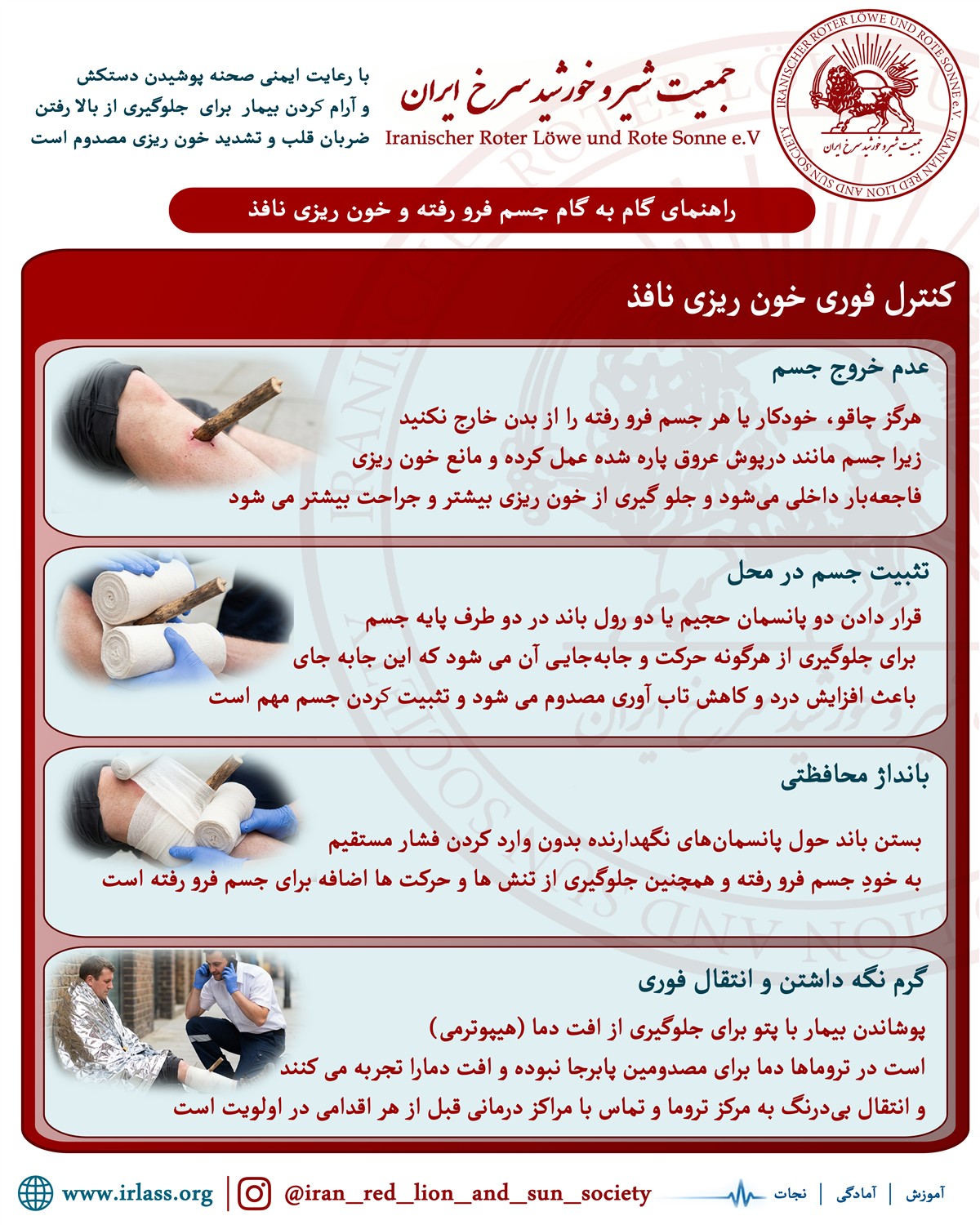
Do not remove or move an embedded object, or press on it. If possible without moving it, support the surrounding area with bulky dressings; otherwise wait for the emergency team.
While waiting for help
Stay with the person and keep checking their breathing and responsiveness. If they become unresponsive, airway and breathing take priority; follow the dispatcher's instructions. Start CPR if breathing is not normal.
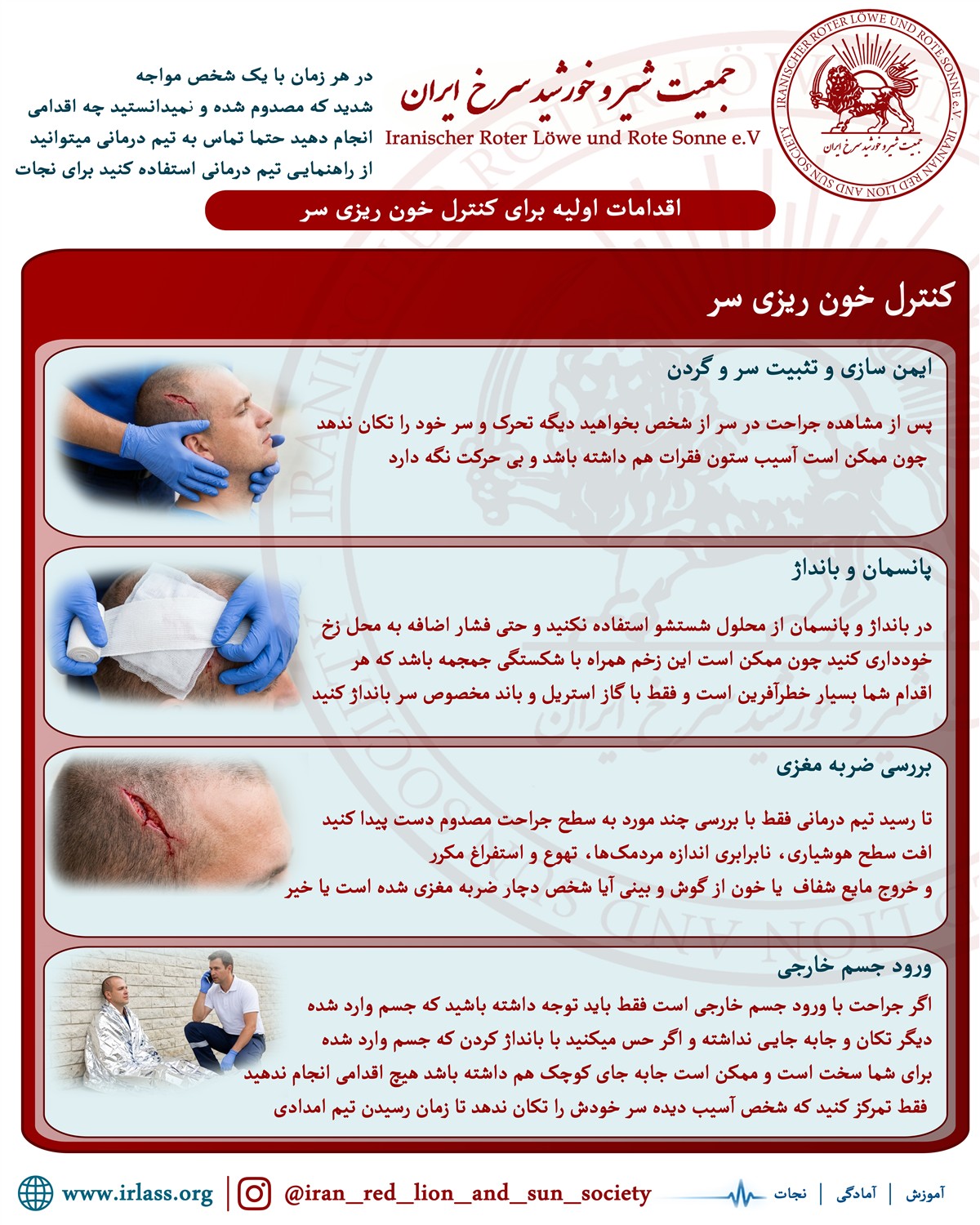
Head injuries and scalp bleeding
03 / IRLASS
Open or penetrating chest wounds
An open chest wound is a serious emergency. Do not wait for breathlessness or bubbling from the wound before calling for help. Report breathing difficulty, pain and changes in responsiveness to the dispatcher.
Get help and check breathing
Check scene safety, put on gloves if available and call emergency services immediately. Monitor responsiveness and breathing, and follow the dispatcher's instructions.
Do not seal the wound airtight
For general first aid, the wound may be left open or covered with clean, dry, non-occlusive gauze. Do not make an airtight or improvised three-sided dressing with plastic and tape. A specialised vented chest seal requires appropriate training.
If breathing worsens
If breathing becomes more difficult after a dressing is applied, loosen or remove it and tell emergency services immediately. Do not probe the wound or insert any device into the chest to release air.
Embedded objects and positioning
Do not remove an embedded object. If possible, support around it without pressure or movement. Keep an alert person in the position in which breathing is easiest; do not force them to sit up or move.
Care until help arrives
Keep the person warm and give nothing to eat or drink. If they become unresponsive, check their airway and breathing and obtain dispatcher guidance. Start CPR if they are not breathing normally.
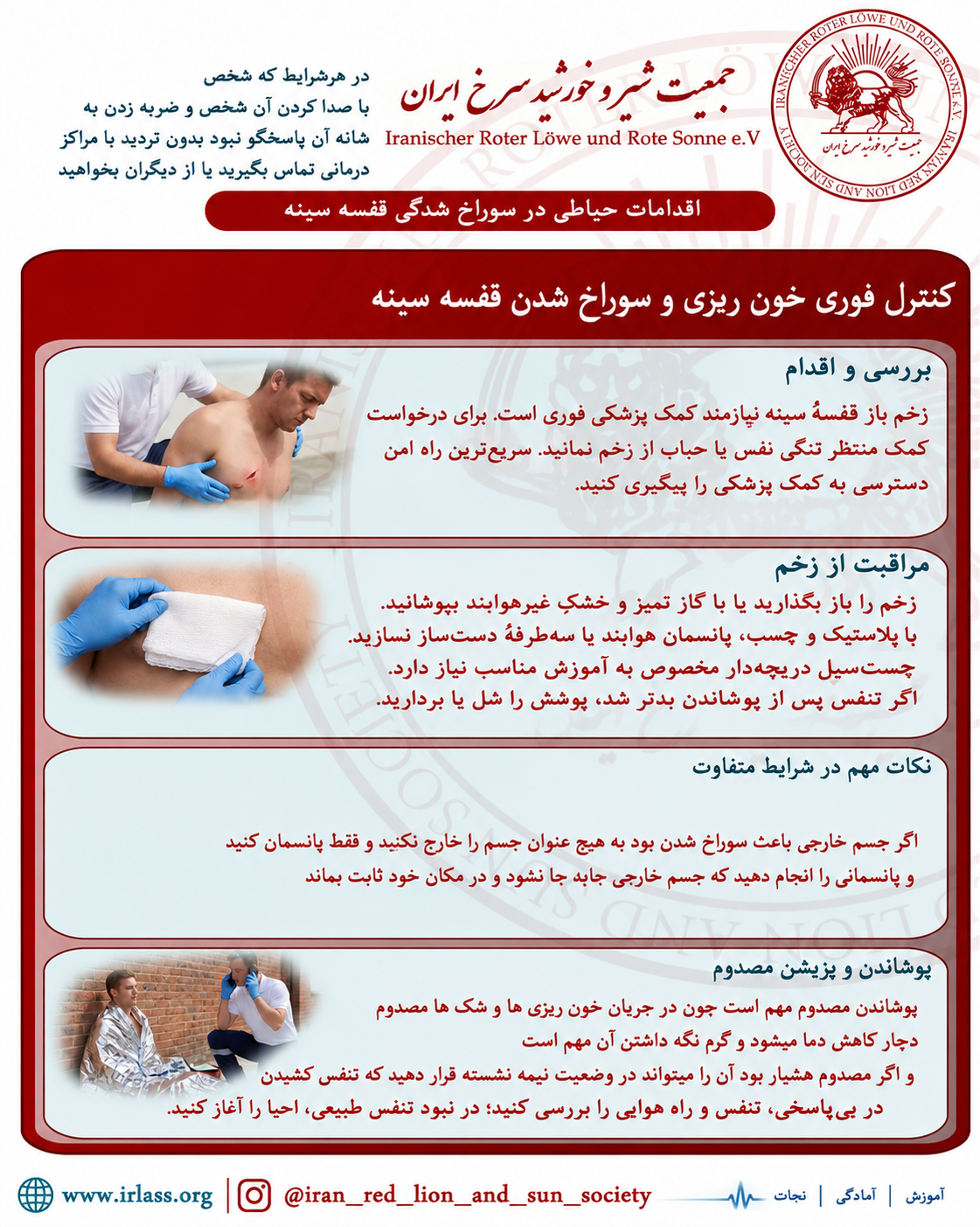
Open or penetrating chest wounds
04 / IRLASS
Open abdominal wounds and exposed organs
An open abdominal wound, especially with exposed organs, needs immediate emergency help. First make sure the scene is safe and wear gloves if available.
Do not manipulate exposed organs
Do not press on exposed organs or push them back into the abdomen. Do not pour water or solution over them to clean them, or rub them. Do not remove an embedded object.
A moist protective covering
Moisten sterile gauze or a clean, lint-free cloth with sterile saline and place it gently over the area without pressure. If saline is unavailable, clean lukewarm water can be used to moisten the covering. If available, loosely place clean plastic over the dressing to retain moisture. Do not bandage tightly.
Comfort and minimal movement
If other injuries do not prevent it, the person may lie on their back with knees slightly bent if comfortable. Do not force a position or move them unnecessarily.
Warmth and nothing by mouth
Use a blanket to prevent chilling without pressing on the injury. Do not give food, drink or oral medication.
Monitor until help arrives
Watch breathing and responsiveness and report changes to emergency services. Do not repeatedly lift the dressing to inspect or handle the wound. If the person is unresponsive and not breathing normally, start CPR following dispatcher instructions.
Iranian Red Lion and Sun Society · Education
Bleeding control and embedded objects
Bleeding control and wound care
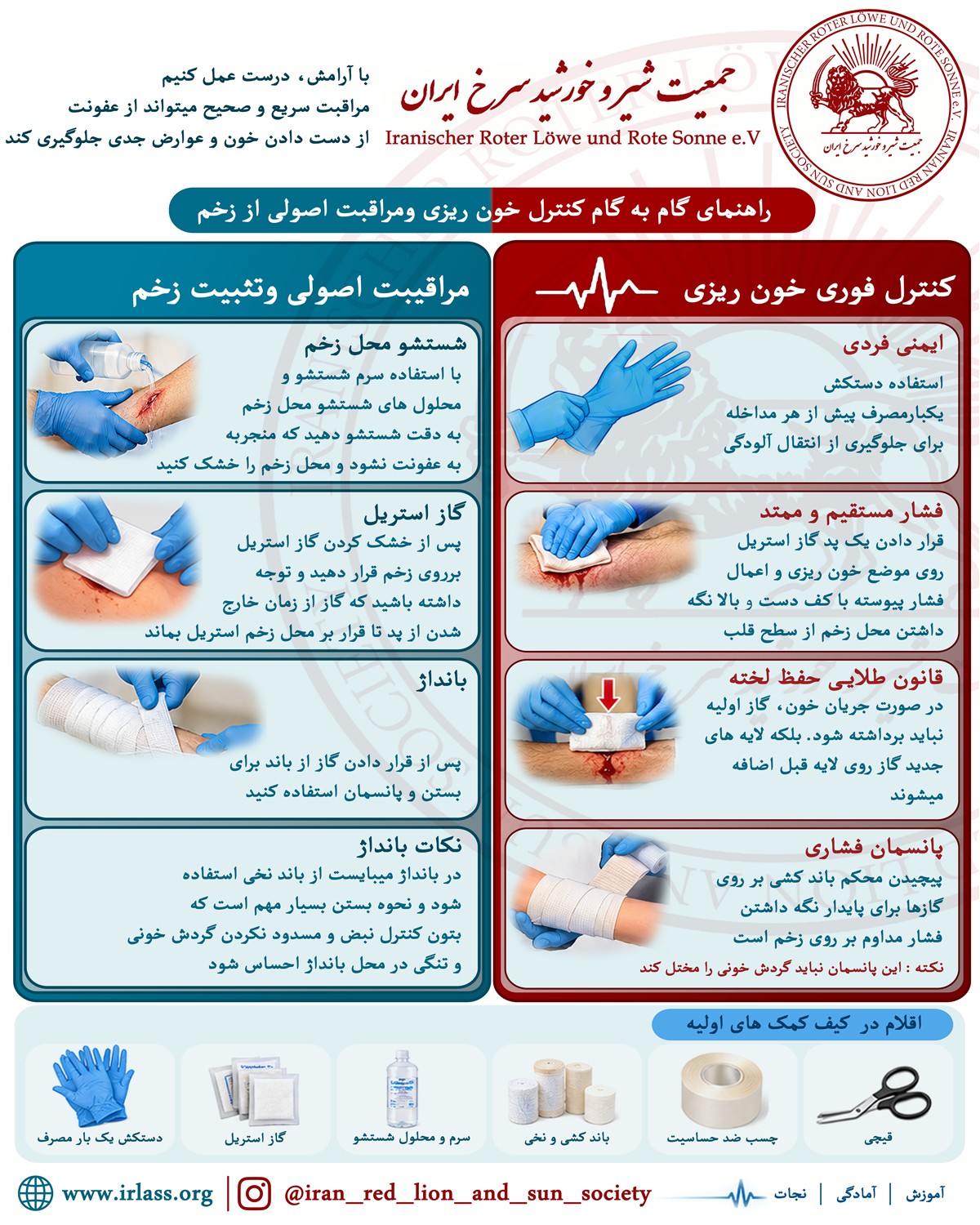
First aid for embedded objects
Casualty transport: visual learning collection
Related posters are grouped together. Open a larger image to read its text. These posters introduce techniques; they are not stand-alone instructions for performing them.
Preparation and walking assistance
Carrying water does not mean it is appropriate to give every casualty a drink. Do not give food or drink to a seriously injured person or someone with reduced consciousness. Walking assistance is not suitable for every injury.
Text in the poster:As a first-aid responder, always carry a bottle of water to help injured people during protests.
Education Department, Iranian Red Lion and Sun Society.
Text in the poster:Another method for quickly moving injured people during protests is the one-person walking-assist method.
Education Department, Iranian Red Lion and Sun Society.
Text in the poster:One method for quickly moving injured people during protests is walking assistance by two people.
Education Department, Iranian Red Lion and Sun Society.
One-person carries and drags
These techniques can worsen injuries. Do not perform them on a casualty based on a picture alone. Even in immediate danger, rescuer safety and the minimum necessary movement matter.
Text in the poster:One way to move injured people during protests is the piggyback carry.
Education Department, Iranian Red Lion and Sun Society.
Text in the poster:Another method for quickly moving injured people during protests is the one-person method referred to here as the firefighter method.
Education Department, Iranian Red Lion and Sun Society.
Text in the poster:Another method for quickly moving injured people during protests is the one-person carry using one arm and one leg.
Education Department, Iranian Red Lion and Sun Society.
Text in the poster:Another method for quickly moving injured people during protests is the one-person drag.
Education Department, Iranian Red Lion and Sun Society.
Text in the poster:For quickly moving injured people during protests, a one-person blanket drag is illustrated.
Education Department, Iranian Red Lion and Sun Society.
Two-person carries and hand seats
The person’s ability to cooperate and the type of injury affect the choice of method. Practise carries under a qualified instructor.
Text in the poster:Another method for quickly moving injured people during protests is the two-person fore-and-aft carry.
Education Department, Iranian Red Lion and Sun Society.
Text in the poster:Injured people can be moved quickly using a two-person chair carry.
Education Department, Iranian Red Lion and Sun Society.
Text in the poster:One method for quickly moving injured people during protests is the two-hand seat carry.
Education Department, Iranian Red Lion and Sun Society.
Text in the poster:Transporting injured people using the four-hand seat method.
Education Department, Iranian Red Lion and Sun Society.
Team carries, blankets and stretchers
The poster’s “always feet first” statement is not a rule for every situation. Terrain, slopes, equipment and the casualty’s condition must be considered according to practical training and the team leader’s directions.
Text in the poster:One method for quickly moving injured people during protests is the group cradle carry.
Education Department, Iranian Red Lion and Sun Society.
Text in the poster:One method for quickly moving injured people during protests is a group carry using a blanket.
Education Department, Iranian Red Lion and Sun Society.
Text in the poster:Transporting injured people with several helpers using a stretcher.
Education Department, Iranian Red Lion and Sun Society.
Text in the poster:When quickly moving injured people during protests using a multi-person method, always make sure that the casualty’s feet point in the direction of travel.
Education Department, Iranian Red Lion and Sun Society.
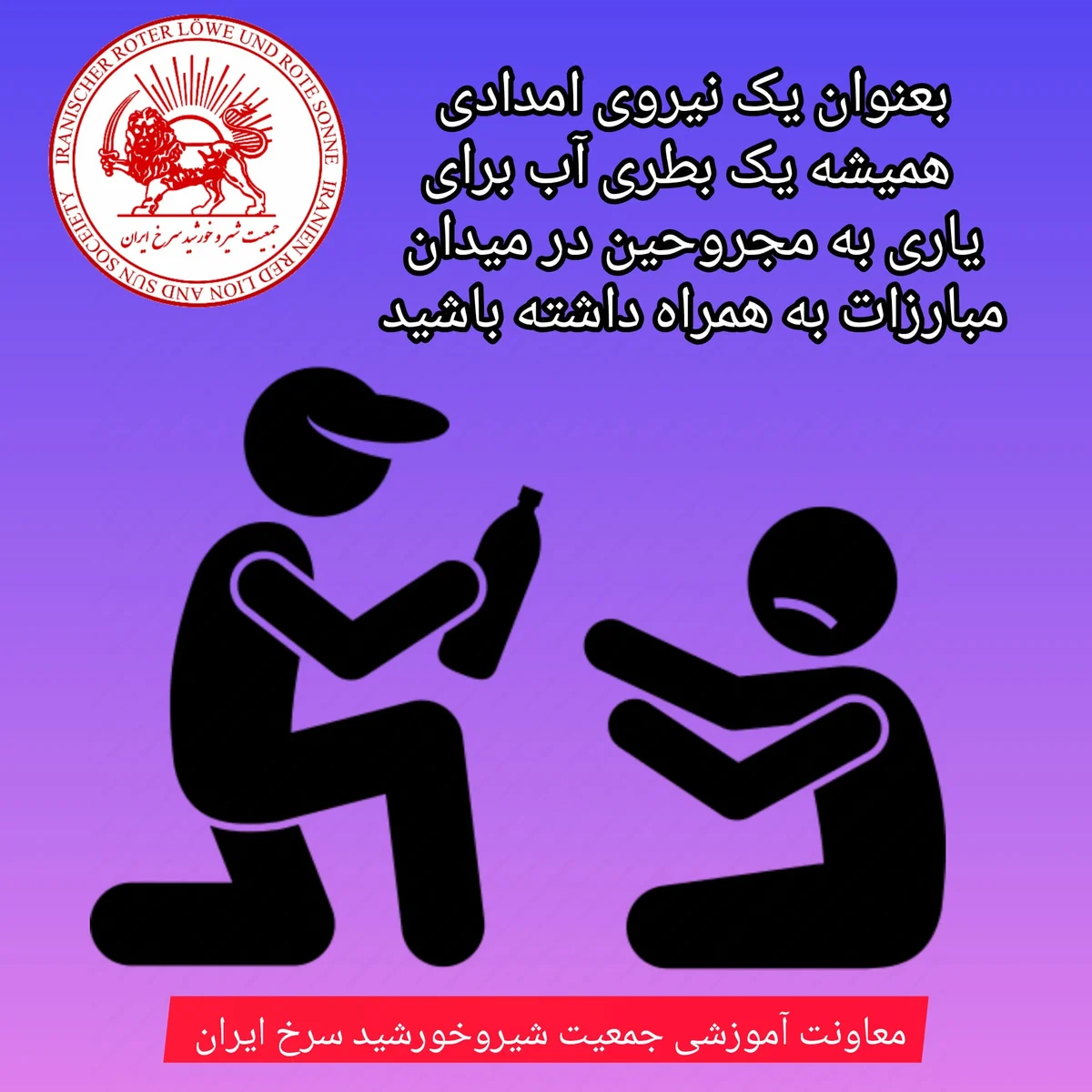
Responder preparation
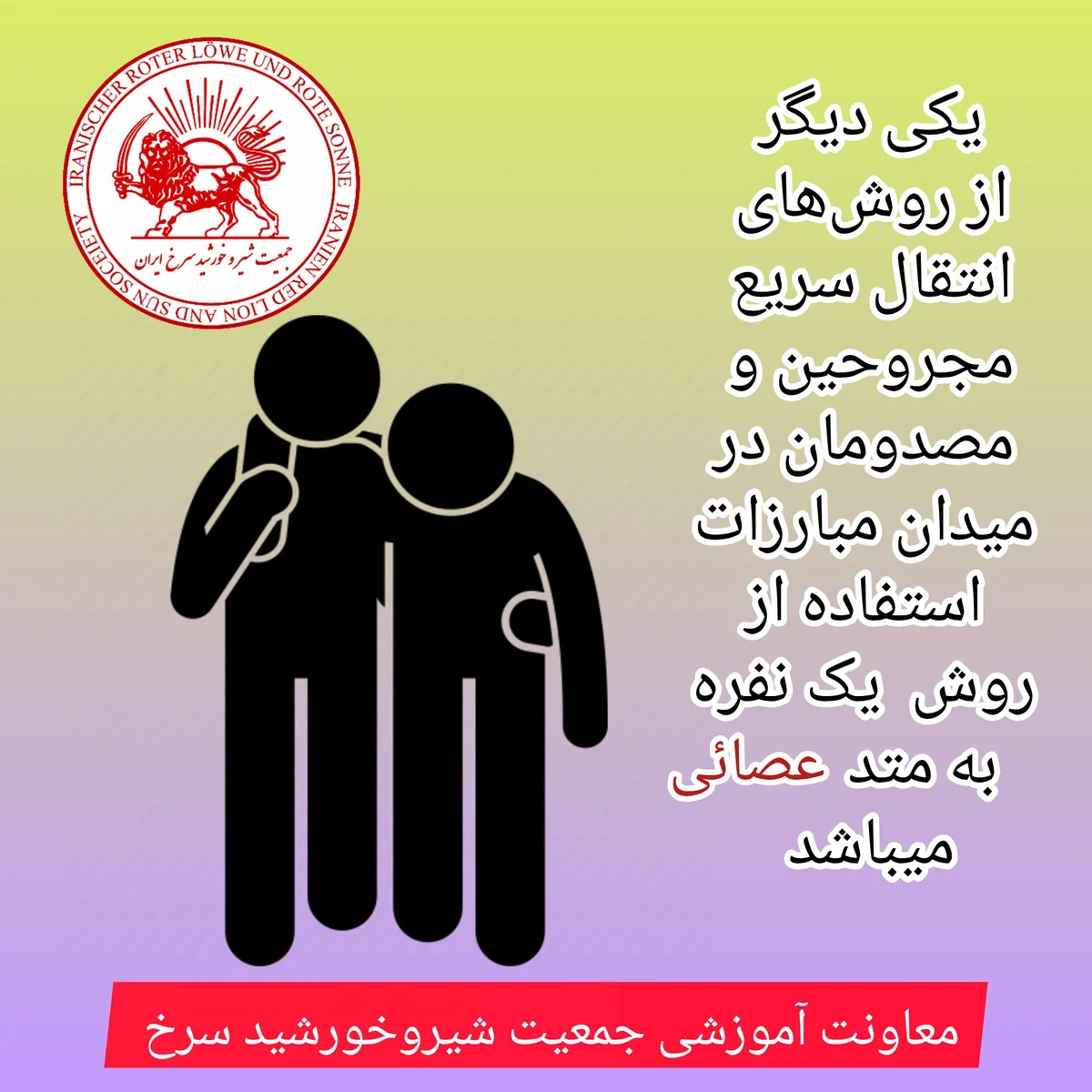
One-person walking assistance
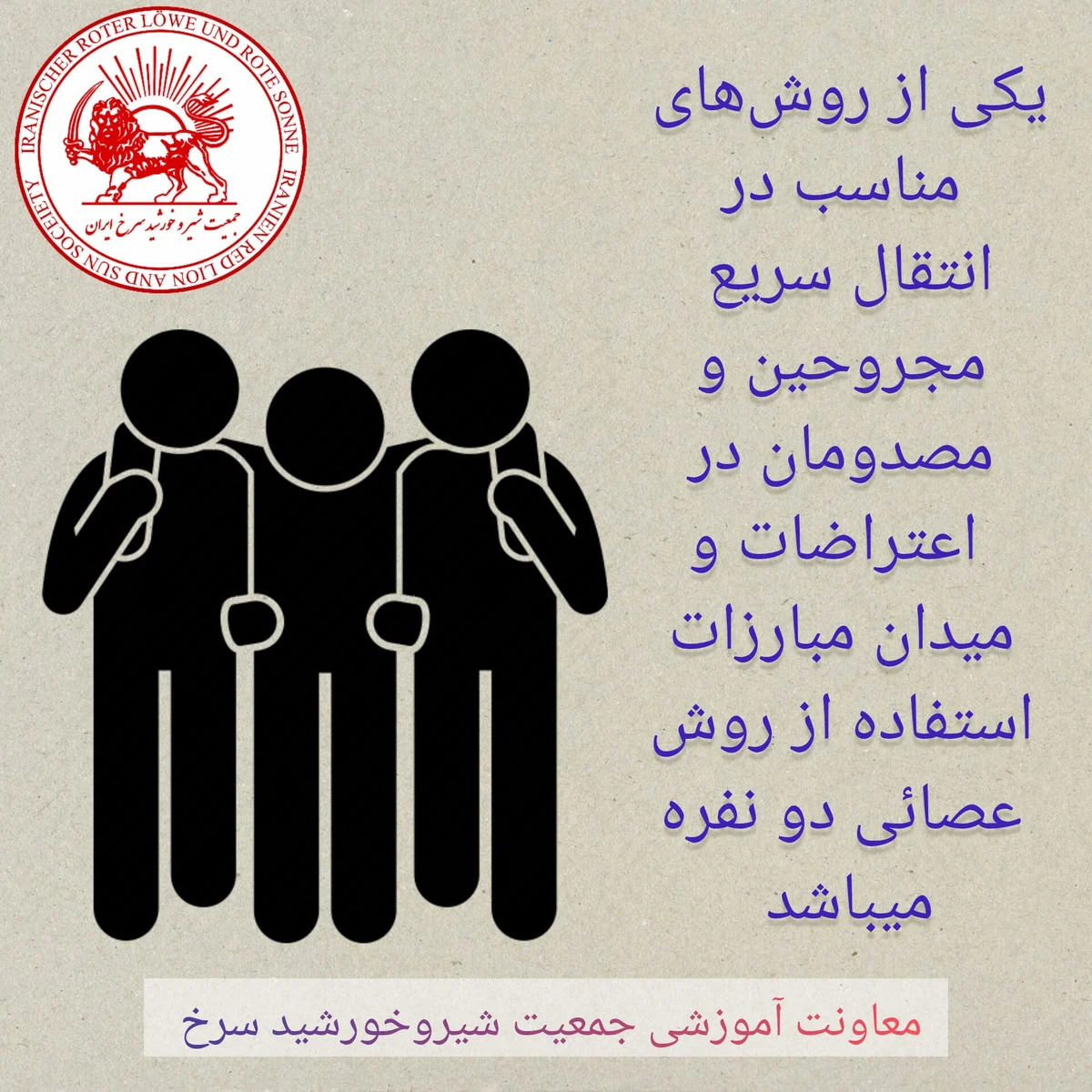
Two-person walking assistance
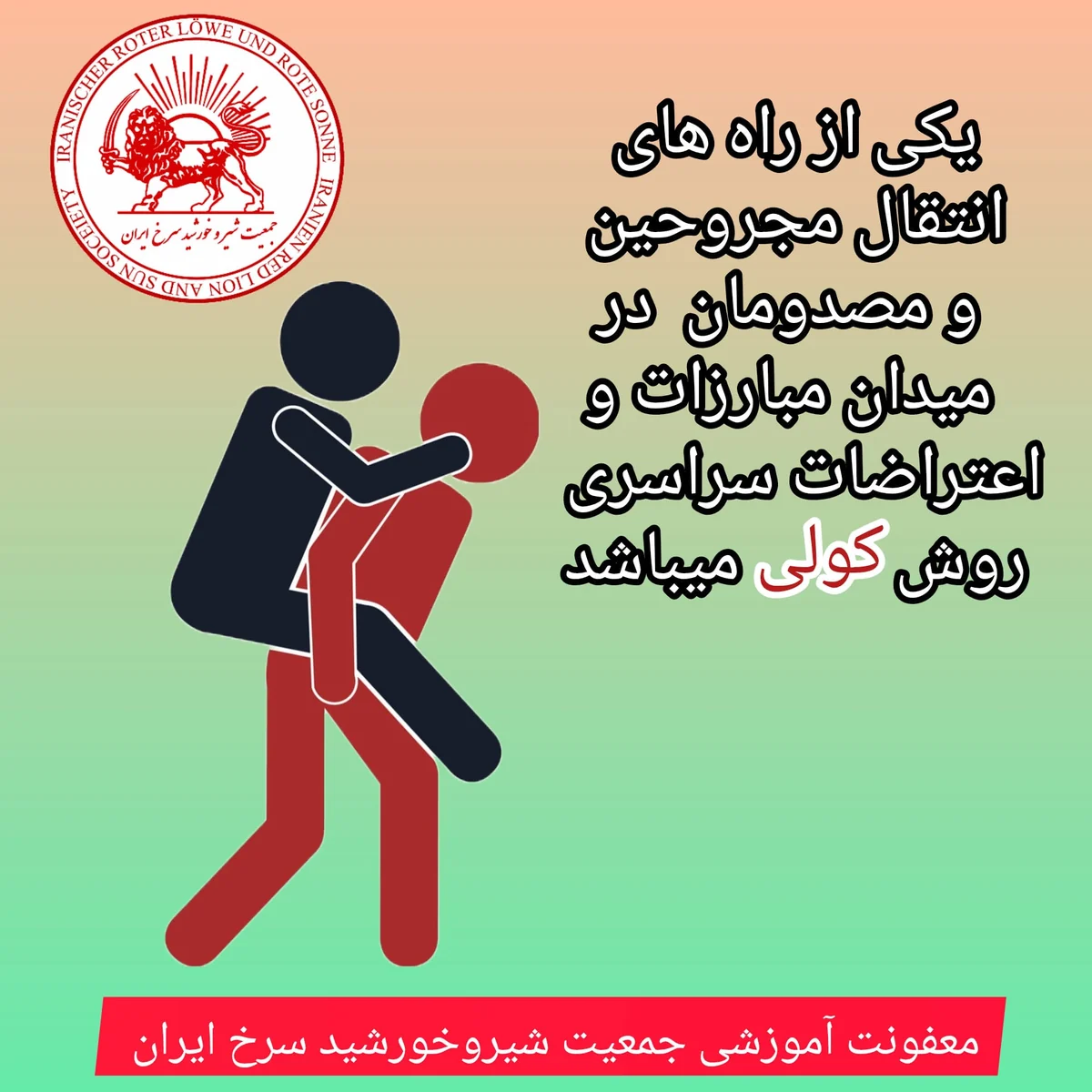
Piggyback carry
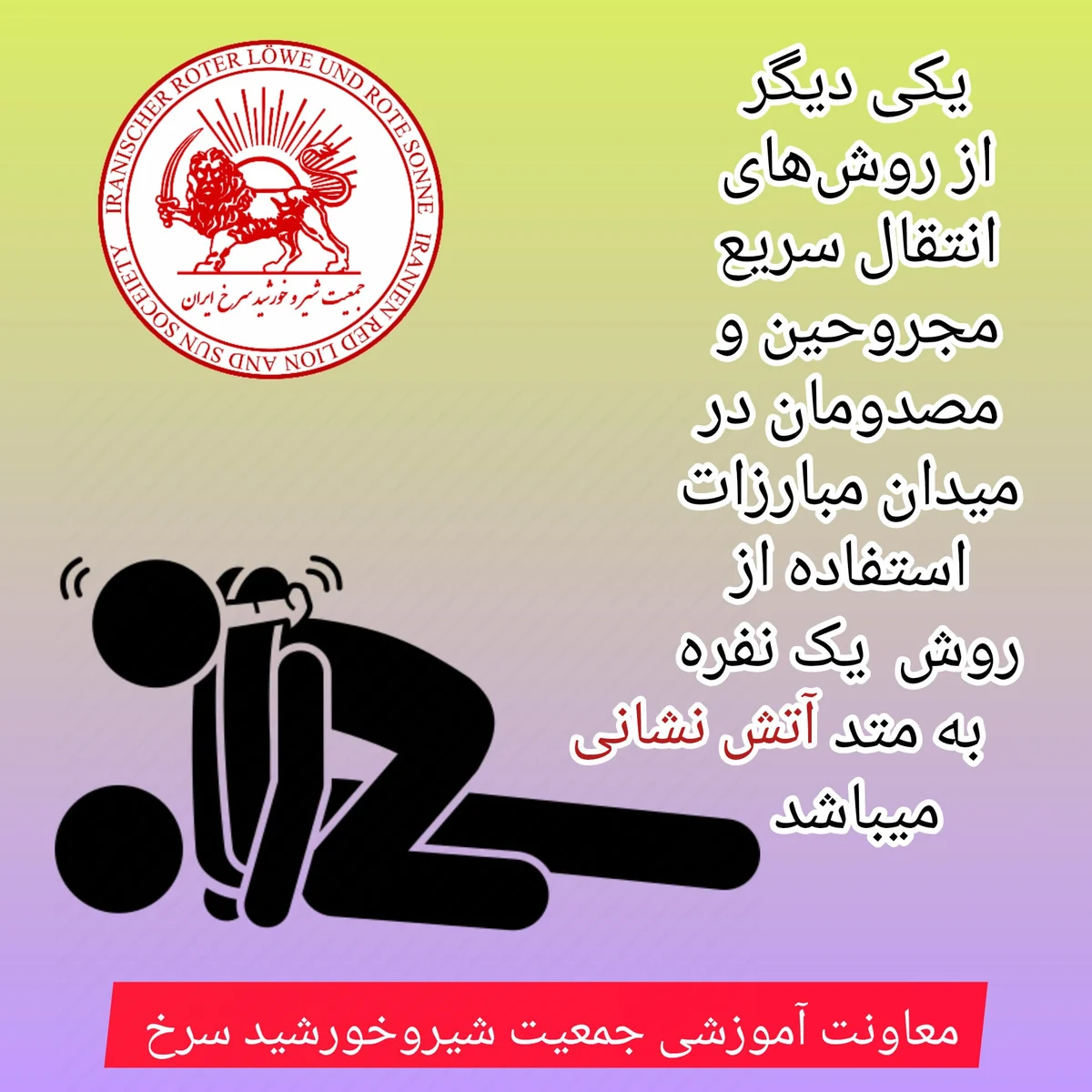
Illustrated firefighter rescue method
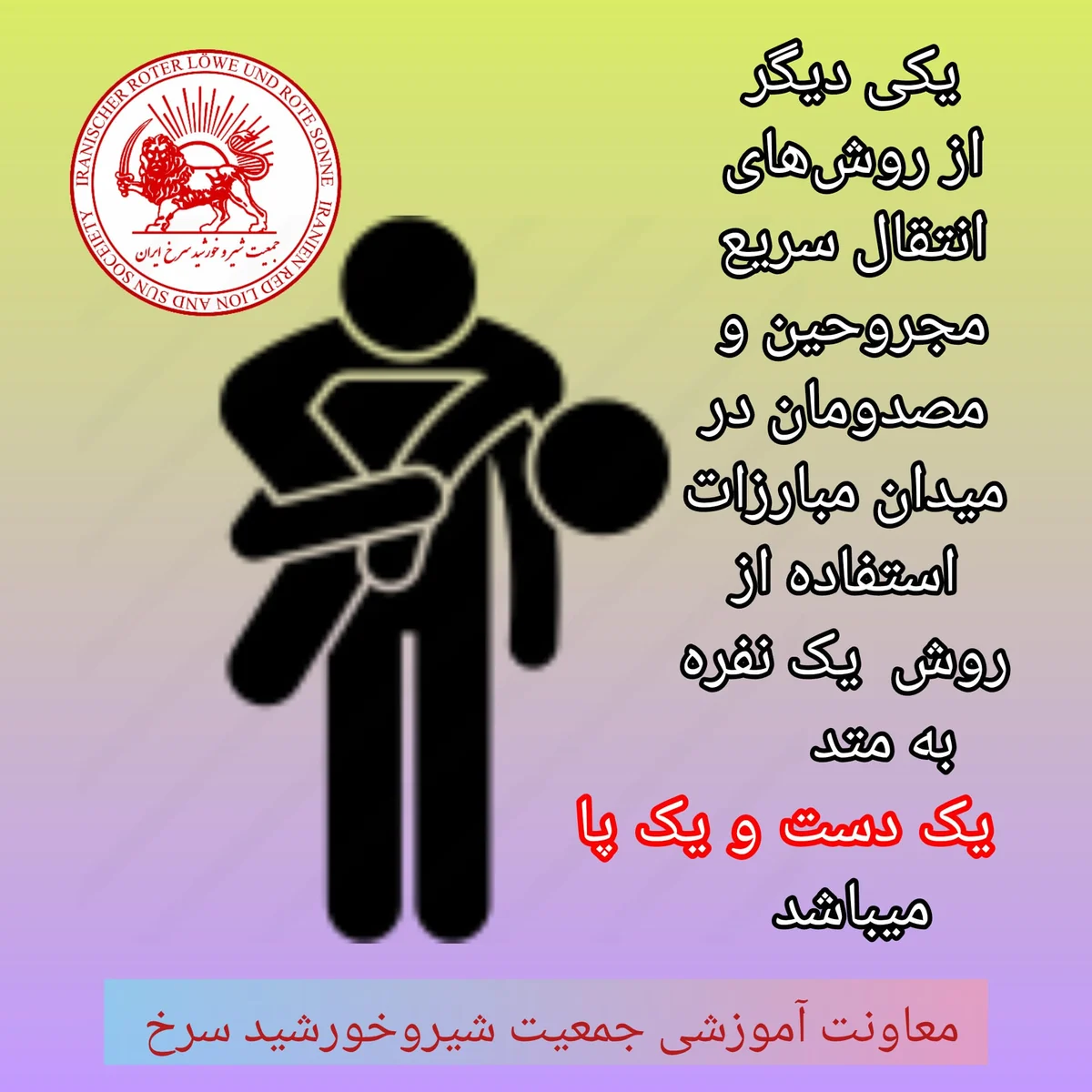
One-arm, one-leg carry
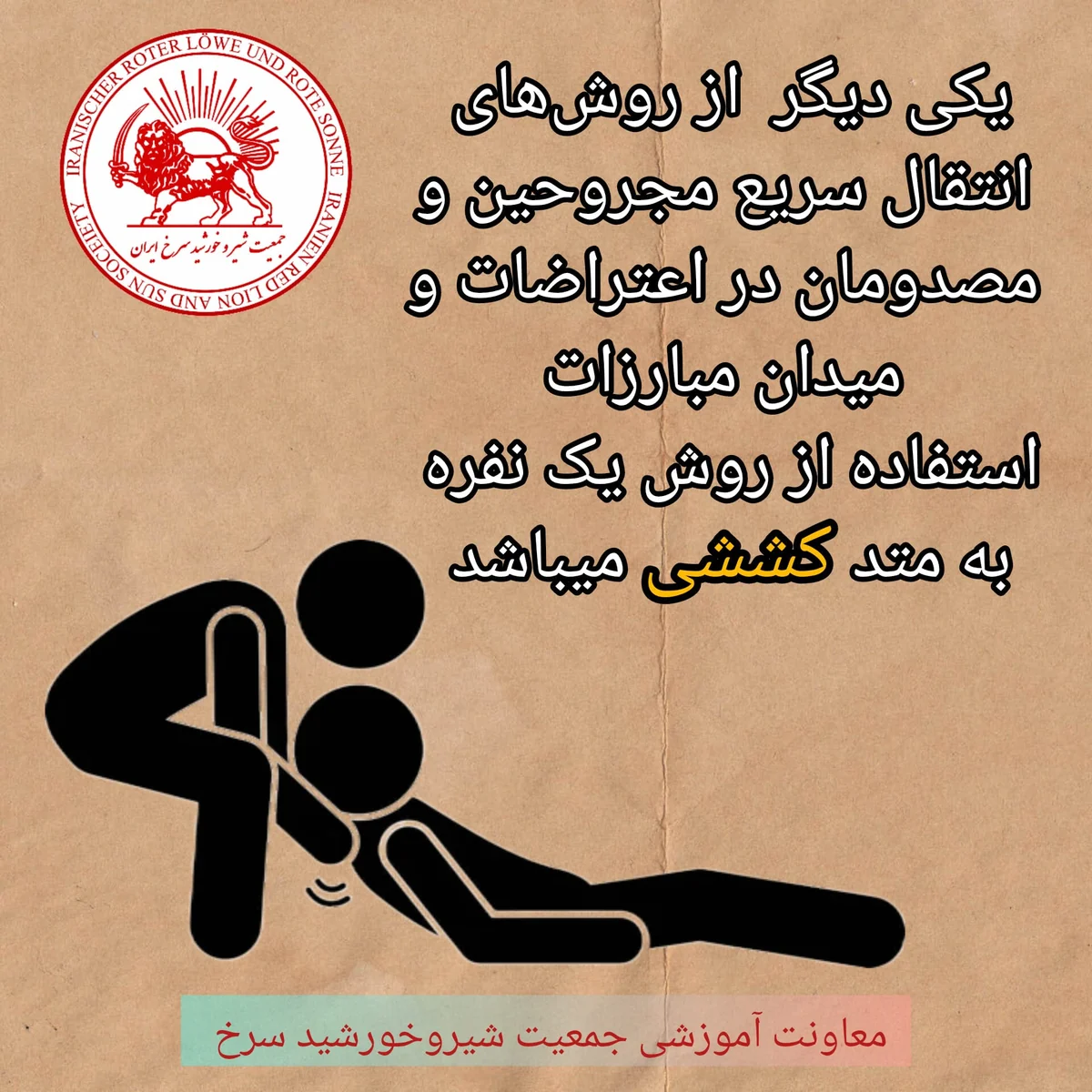
Emergency drag
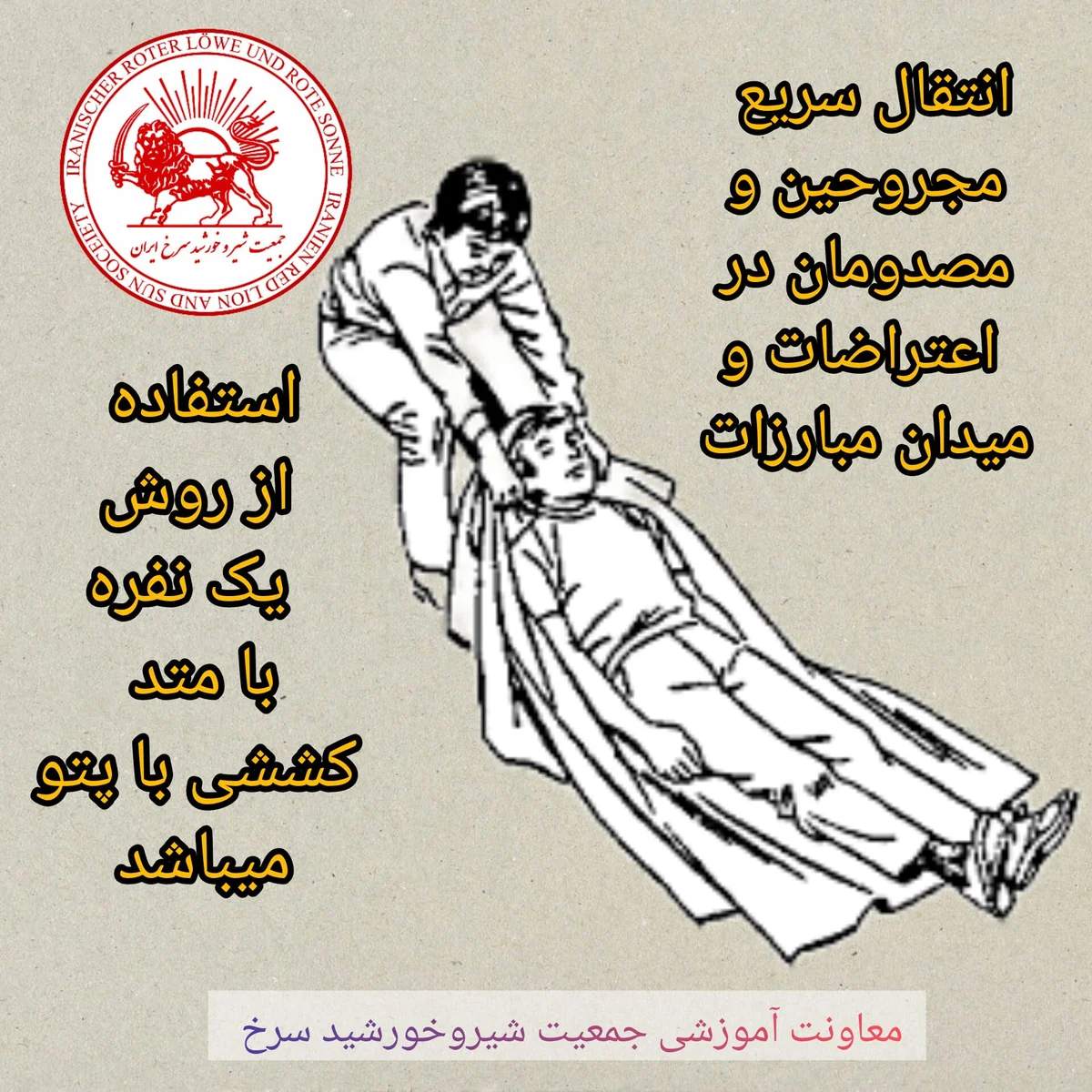
Blanket drag
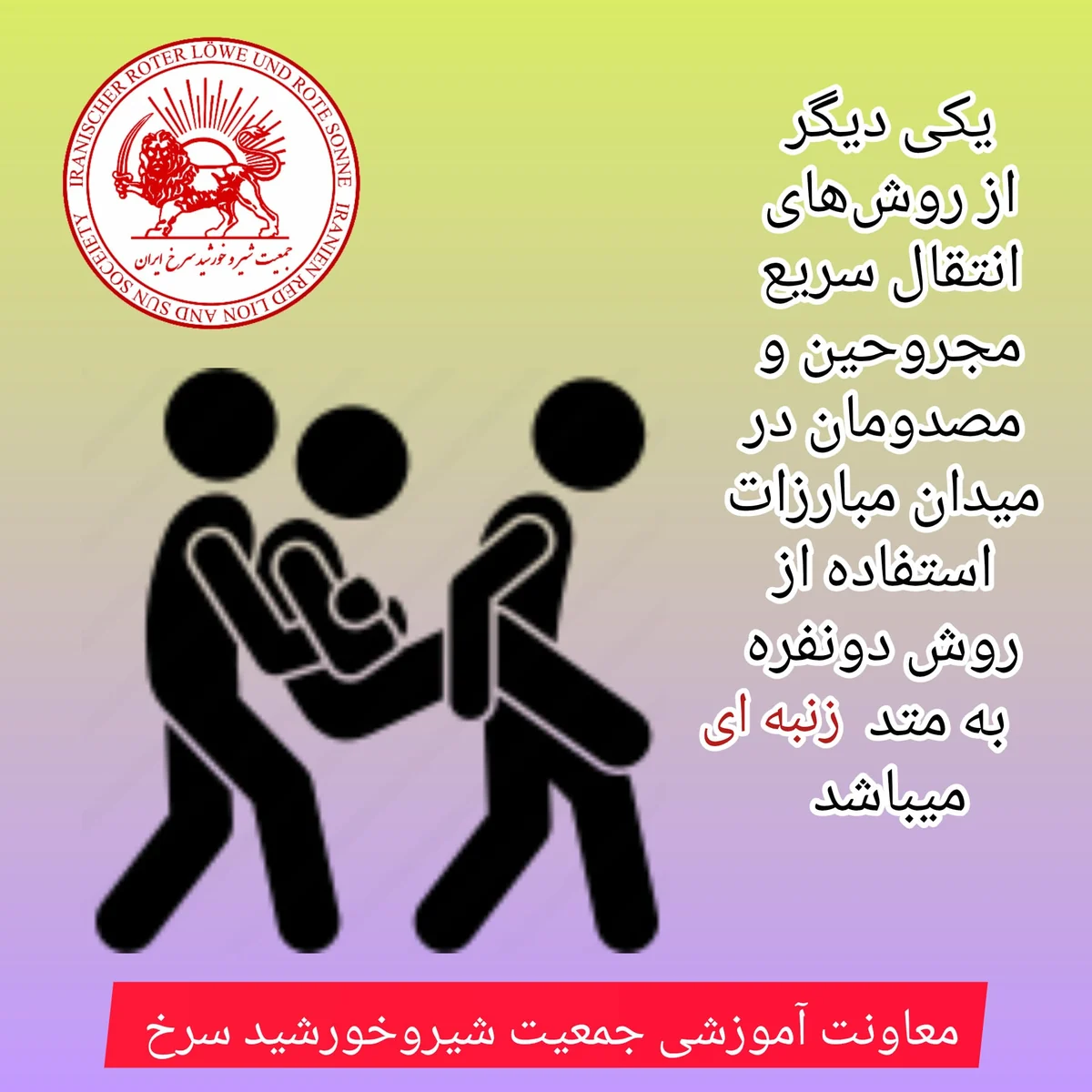
Two-person fore-and-aft carry
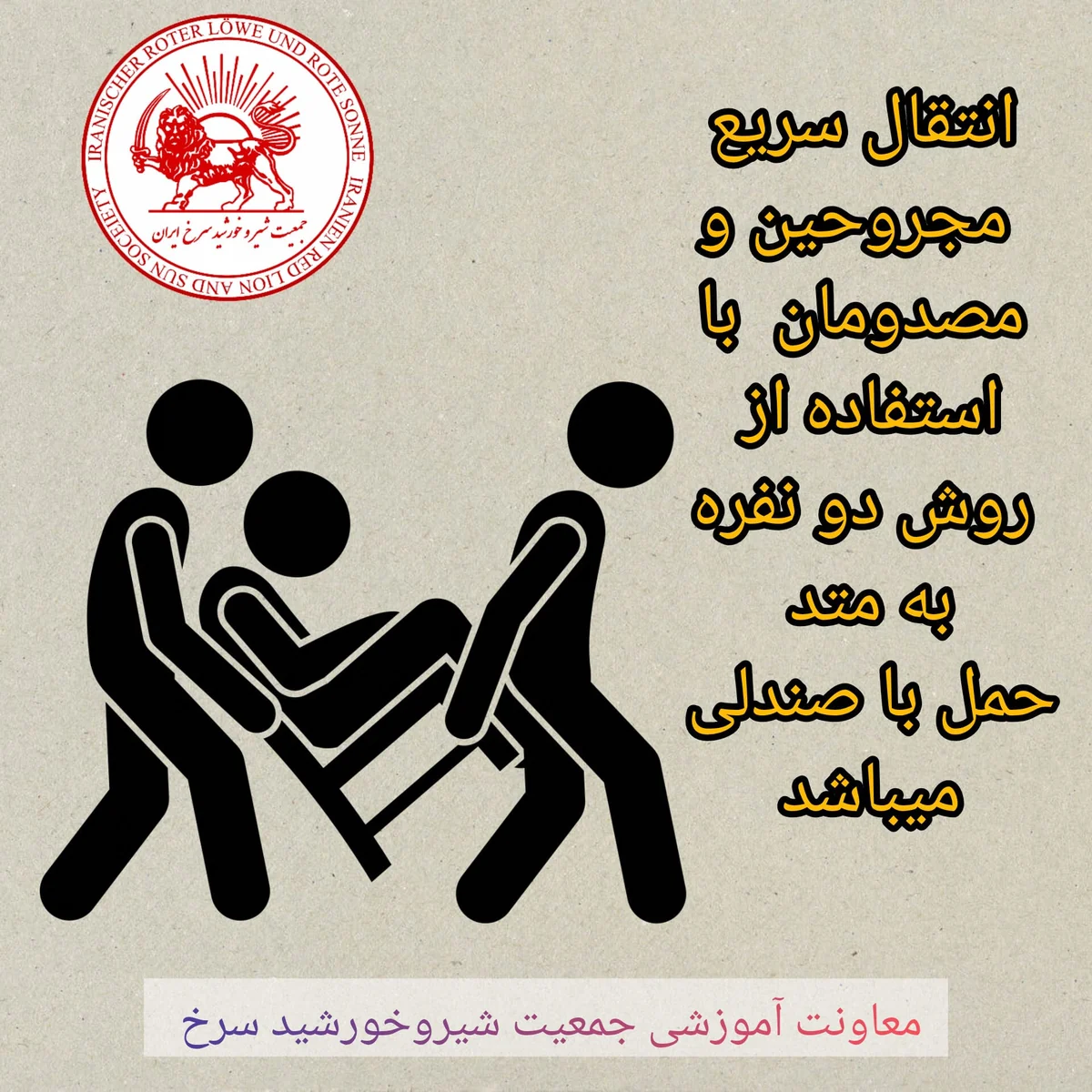
Two-person chair carry
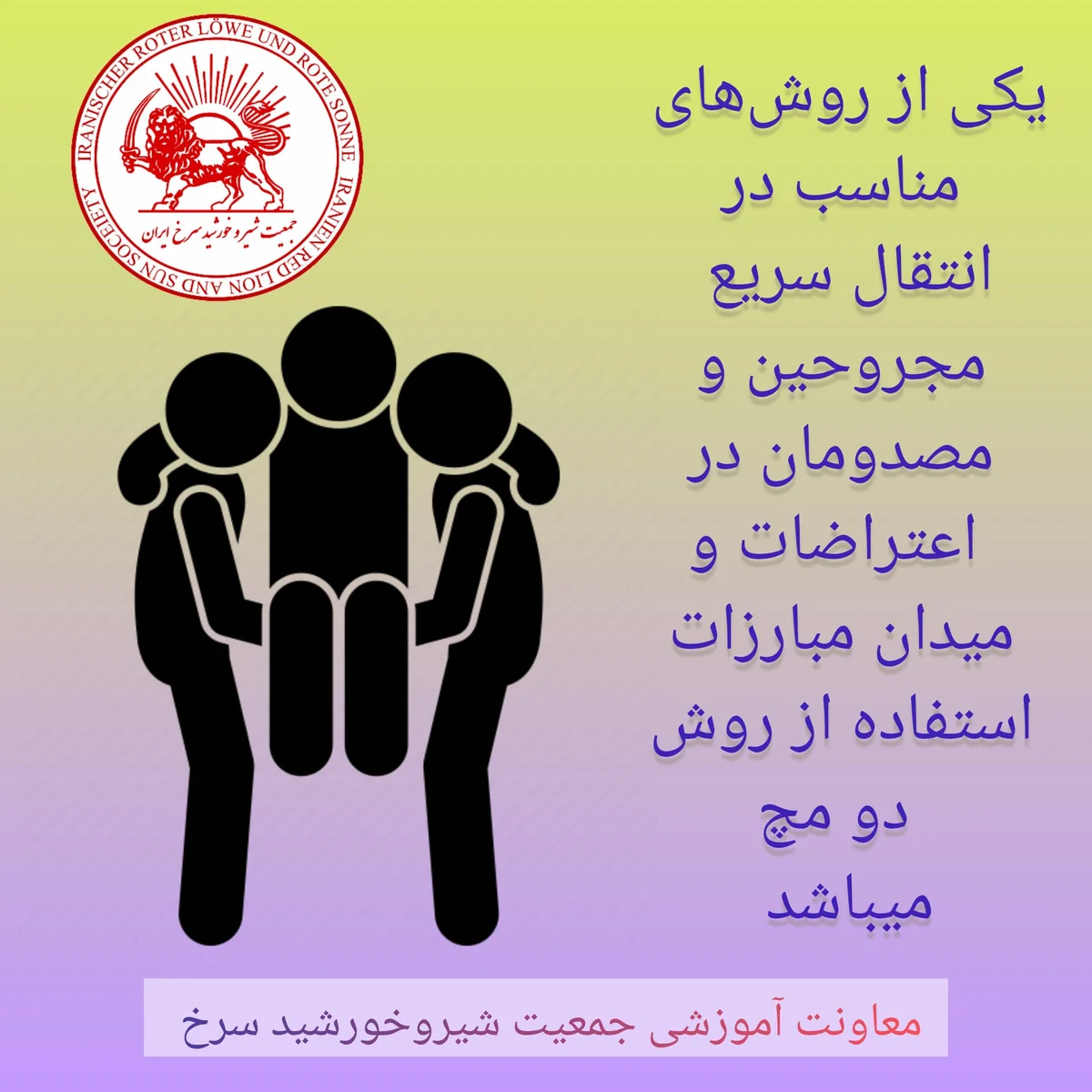
Two-hand seat carry
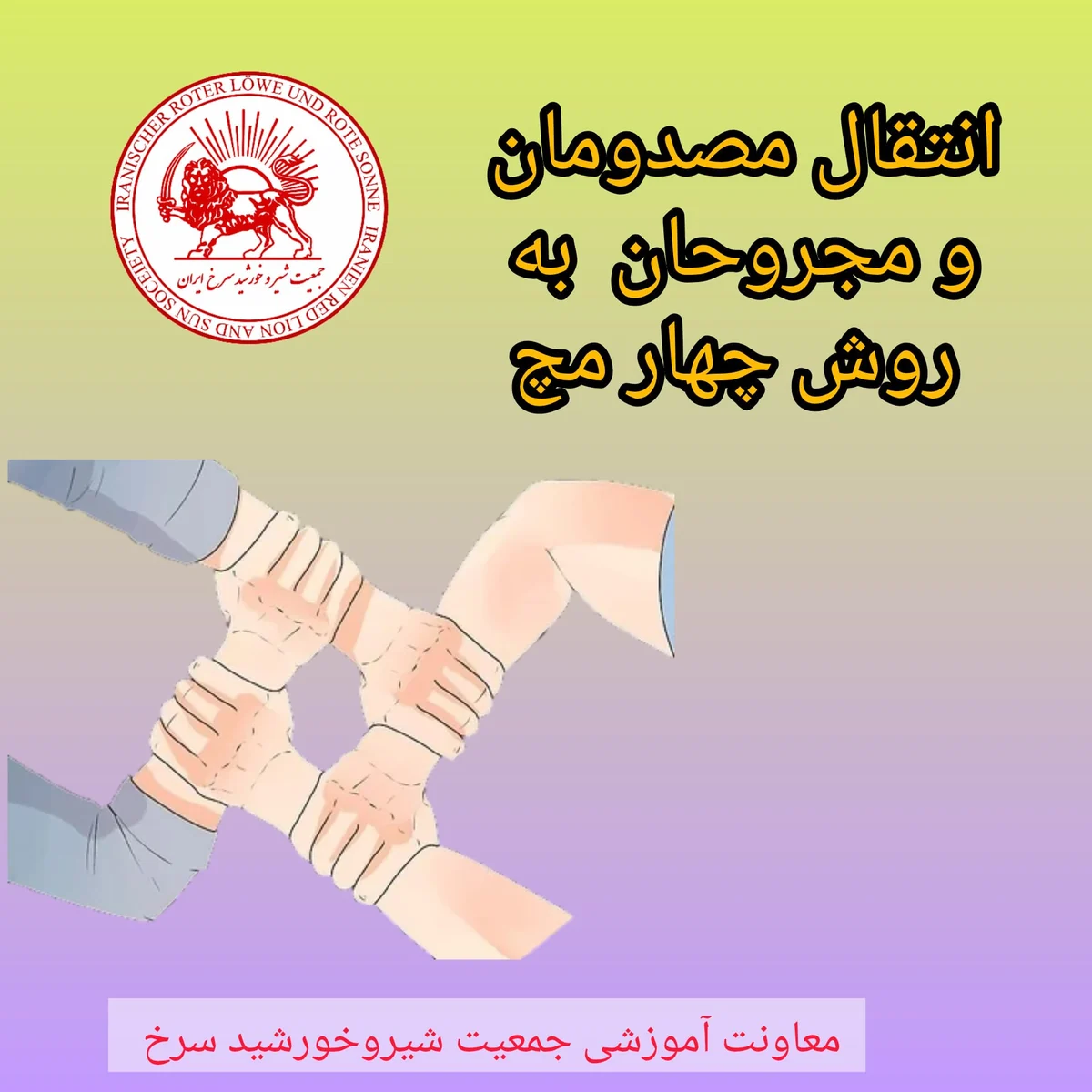
Four-hand seat grip
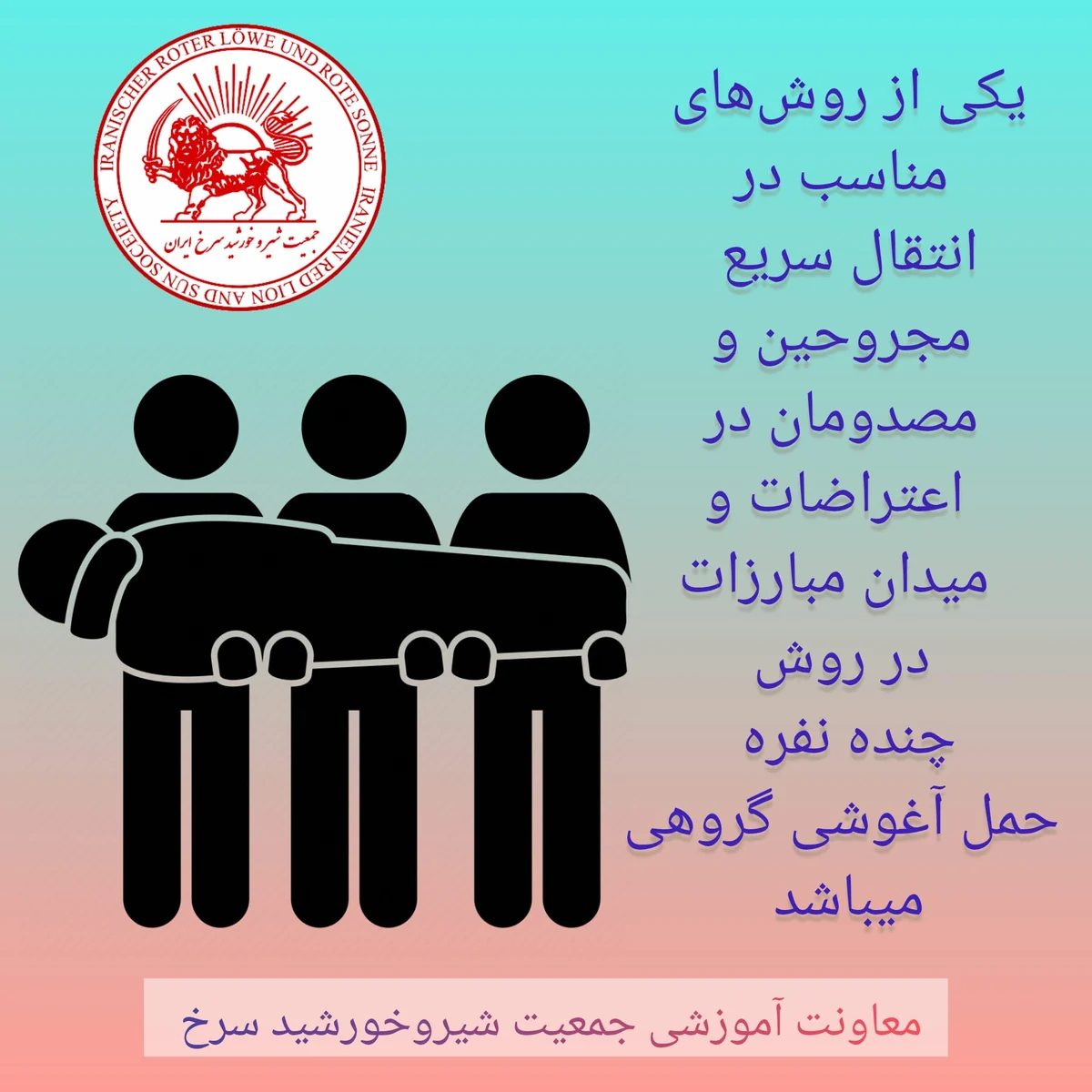
Group cradle carry
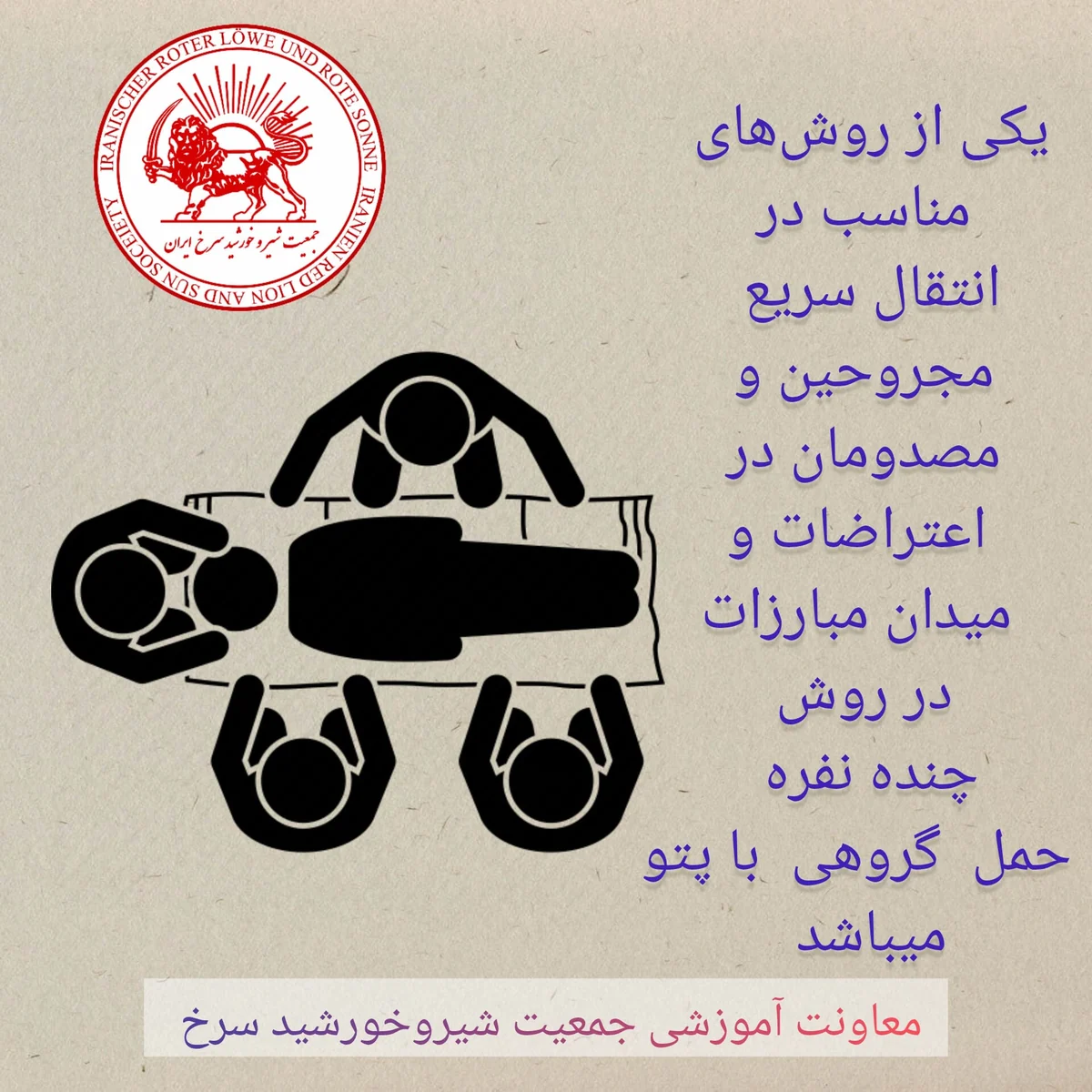
Group blanket carry
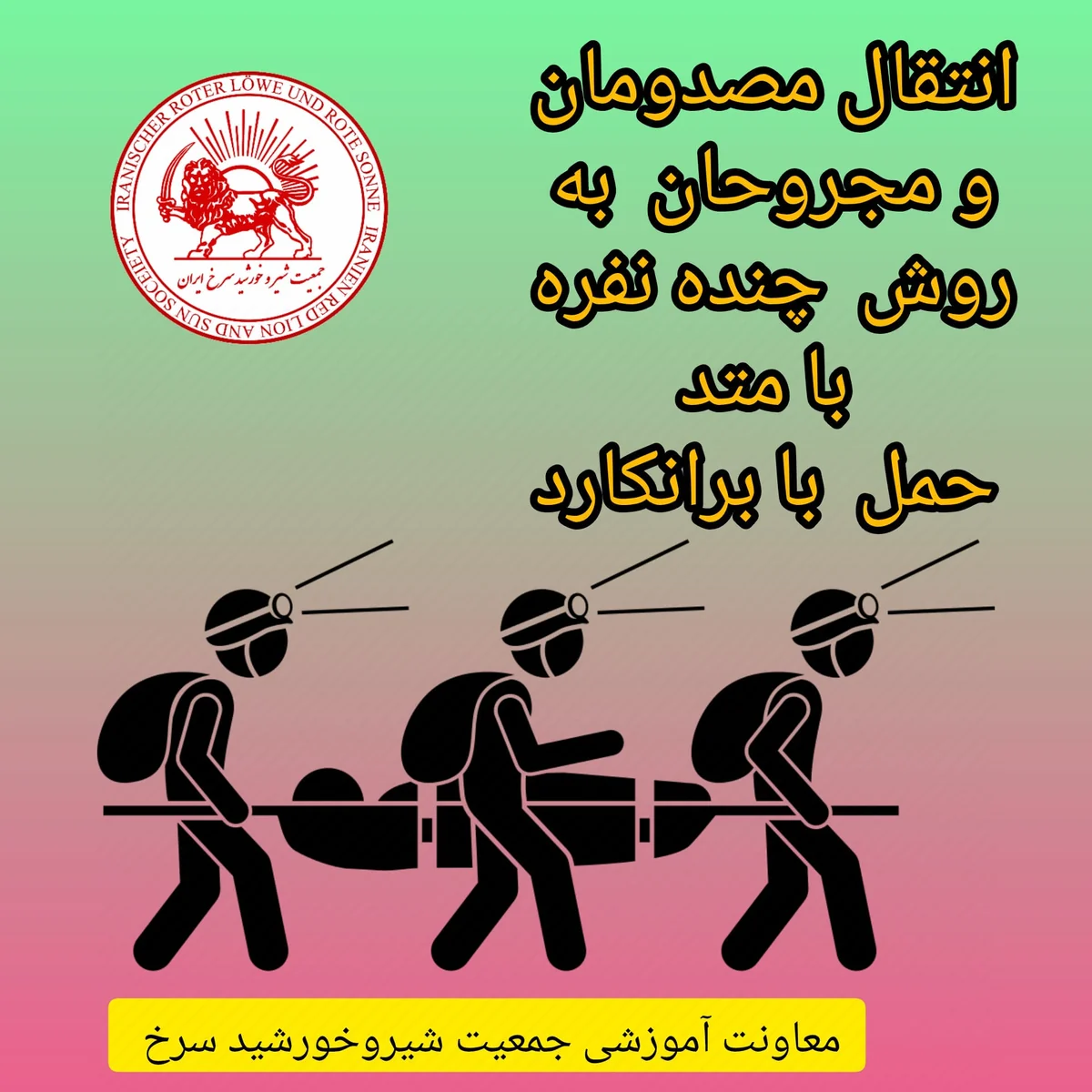
Team stretcher carry
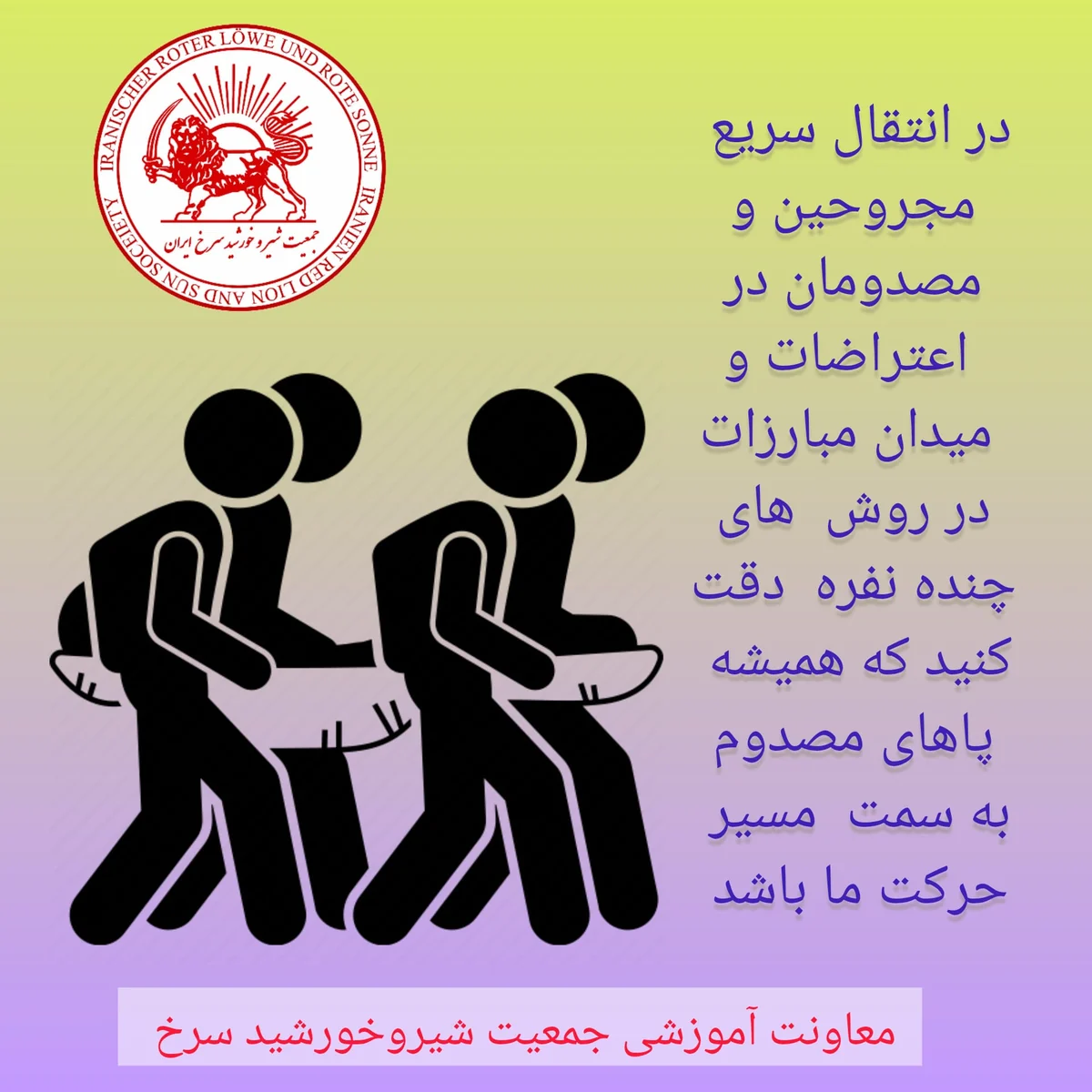
Direction of stretcher transport